Project Lab.
Project Lab.
Project Lab.
Project Lab.
A collaborative hands-on, experimental, multimedia project with my friends, Anne and Yuting, that calls attention to the overlooked details of overlooked plants scattered throughout the fast-paced, constantly moving city of Boston. Through petri dishes, epoxy resin, image tracing, risograph printing, hand-crafted overlapping cards, and laser-cut acrylic plates, we built an observatory-lab–inspired space. The installation invites people to pause, observe, and reconnect with the quiet life that thrives within the city’s constant motion.
Everything carries a story. Just as a rock is shaped by time and weather, I am shaped by experiences and influences. This 170-page book explores those stories through creative layouts, tracing inspirations from childhood nostalgia to the designs that spark my imagination today. It is the story of how I became the designer I am, and like every story, it is still unfolding.
Category:
Interactive/Exhibition
Tool:
Risograph, multimedia

Project Inspiration
Our project was inspired by two Pentagram works. Overlooked 2.0 by Marina Willer revealed beauty in everyday urban details through street-cover rubbings, while Grow to Know, created in response to the Grenfell tragedy, used cyanotype processes to explore nature’s role in connection and healing. Drawing from their use of tracing and photographic techniques to surface the overlooked, we aimed to create a moment of pause in Boston that invites people to slow down, reflect, and notice the city’s quieter details.
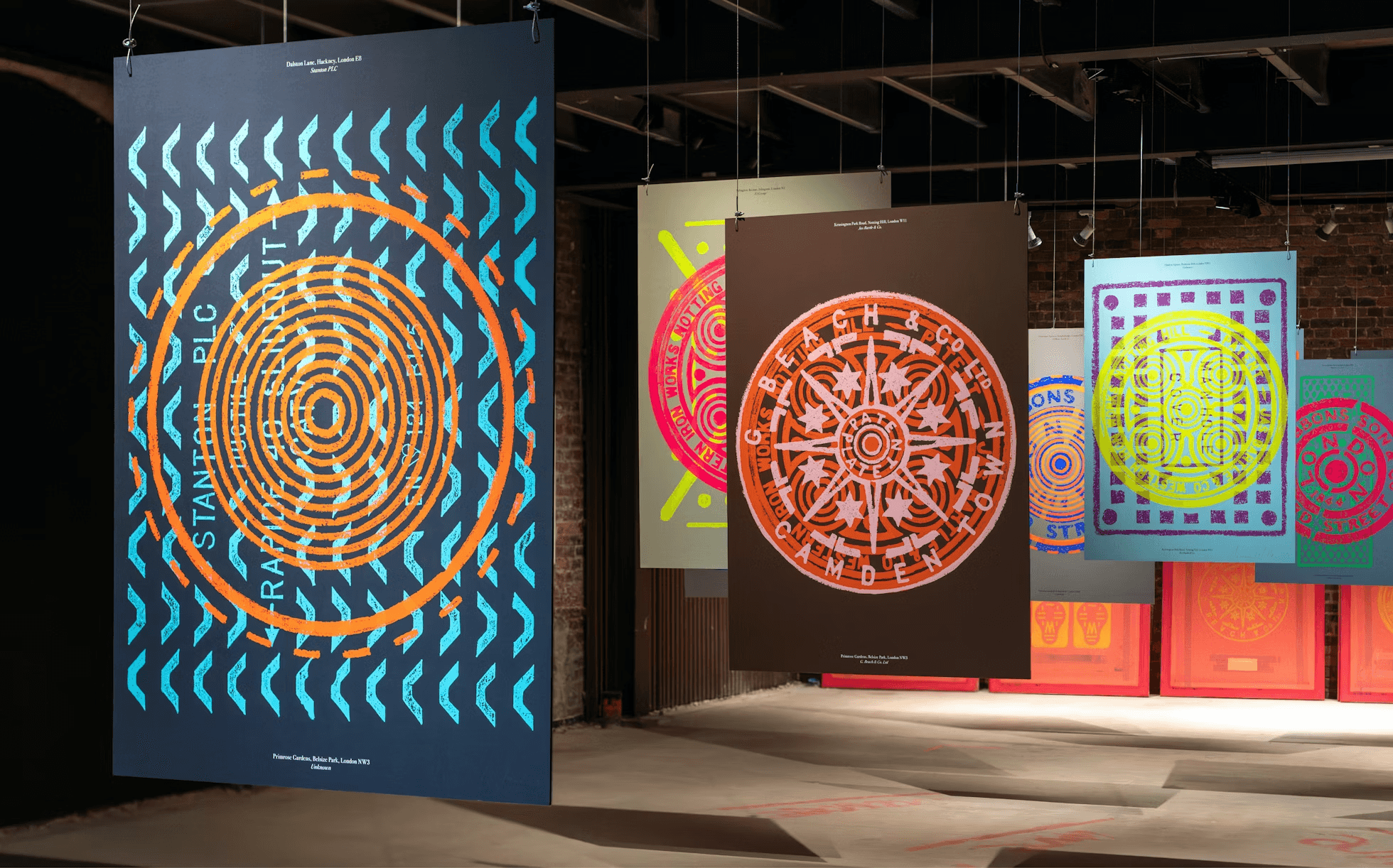

Our project was inspired by two Pentagram works. Overlooked 2.0 by Marina Willer revealed beauty in everyday urban details through street-cover rubbings, while Grow to Know, created in response to the Grenfell tragedy, used cyanotype processes to explore nature’s role in connection and healing. Drawing from their use of tracing and photographic techniques to surface the overlooked, we aimed to create a moment of pause in Boston that invites people to slow down, reflect, and notice the city’s quieter details.
Our project was inspired by two Pentagram works. Overlooked 2.0 by Marina Willer revealed beauty in everyday urban details through street-cover rubbings, while Grow to Know, created in response to the Grenfell tragedy, used cyanotype processes to explore nature’s role in connection and healing. Drawing from their use of tracing and photographic techniques to surface the overlooked, we aimed to create a moment of pause in Boston that invites people to slow down, reflect, and notice the city’s quieter details.
Our project was inspired by two Pentagram works. Overlooked 2.0 by Marina Willer revealed beauty in everyday urban details through street-cover rubbings, while Grow to Know, created in response to the Grenfell tragedy, used cyanotype processes to explore nature’s role in connection and healing. Drawing from their use of tracing and photographic techniques to surface the overlooked, we aimed to create a moment of pause in Boston that invites people to slow down, reflect, and notice the city’s quieter details.
Data Collection Through Plants Photography
I photographed over 50 often-overlooked plants across the Boston University campus, focusing on form, texture, and detail to inform our shapes and patterns. These images became our primary data set, reflecting our process of observing the overlooked as designers.
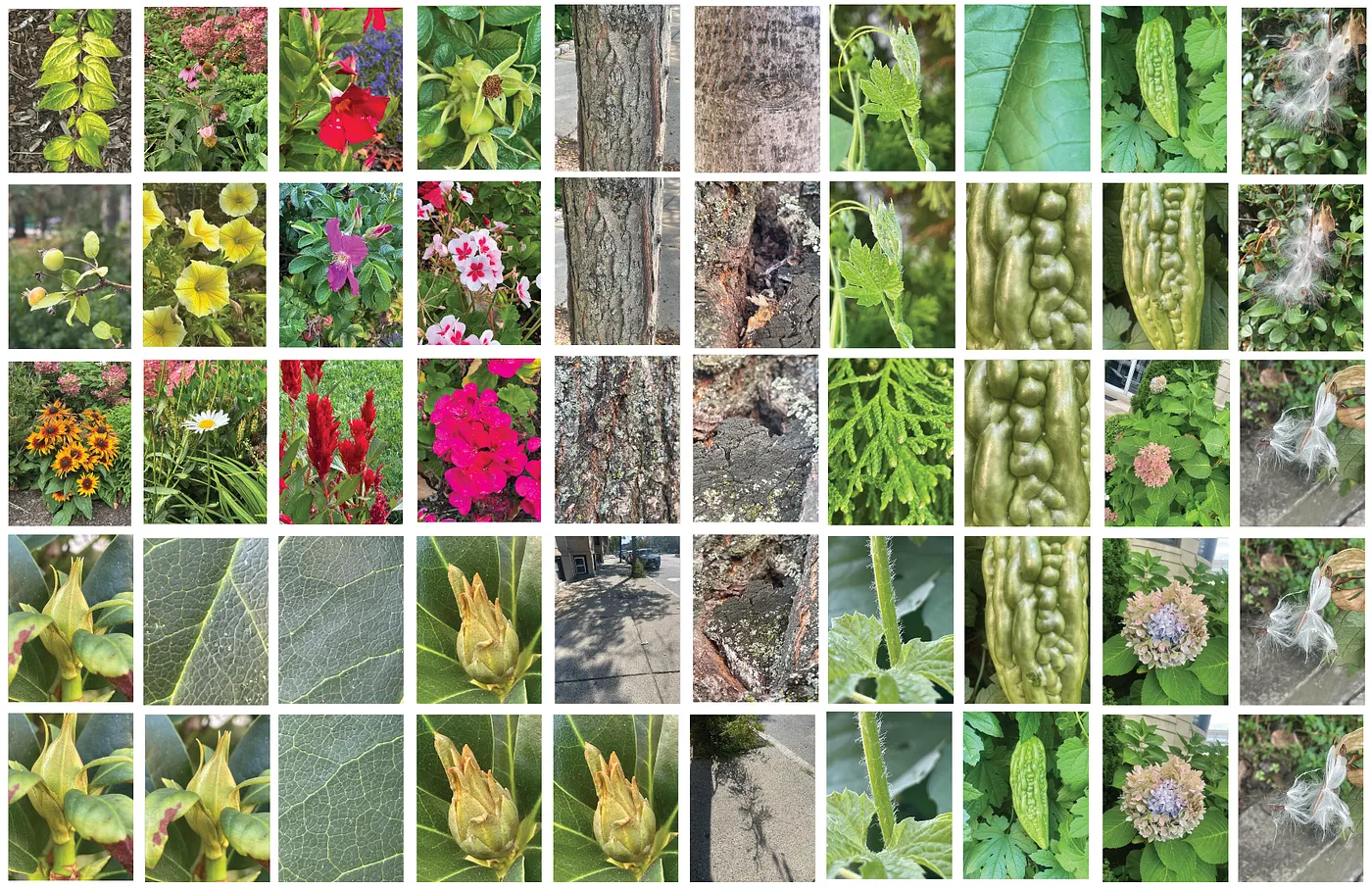
I photographed over 50 often-overlooked plants across the Boston University campus, focusing on form, texture, and detail to inform our shapes and patterns. These images became our primary data set, reflecting our process of observing the overlooked as designers.
I photographed over 50 often-overlooked plants across the Boston University campus, focusing on form, texture, and detail to inform our shapes and patterns. These images became our primary data set, reflecting our process of observing the overlooked as designers.
I photographed over 50 often-overlooked plants across the Boston University campus, focusing on form, texture, and detail to inform our shapes and patterns. These images became our primary data set, reflecting our process of observing the overlooked as designers.
Experimenting with Petri Dish & Epoxy Resin
To transform the overlooked into the observed, we preserved plant fragments in clear epoxy within petri dishes, creating small windows for examining stems, seeds, and veins. Through collecting, cataloging, arranging, and casting, the specimens take on an archival quality. When grouped, the dishes form a grid that slows the viewer’s pace and elevates ordinary sidewalk finds into a shared study of urban plant life.
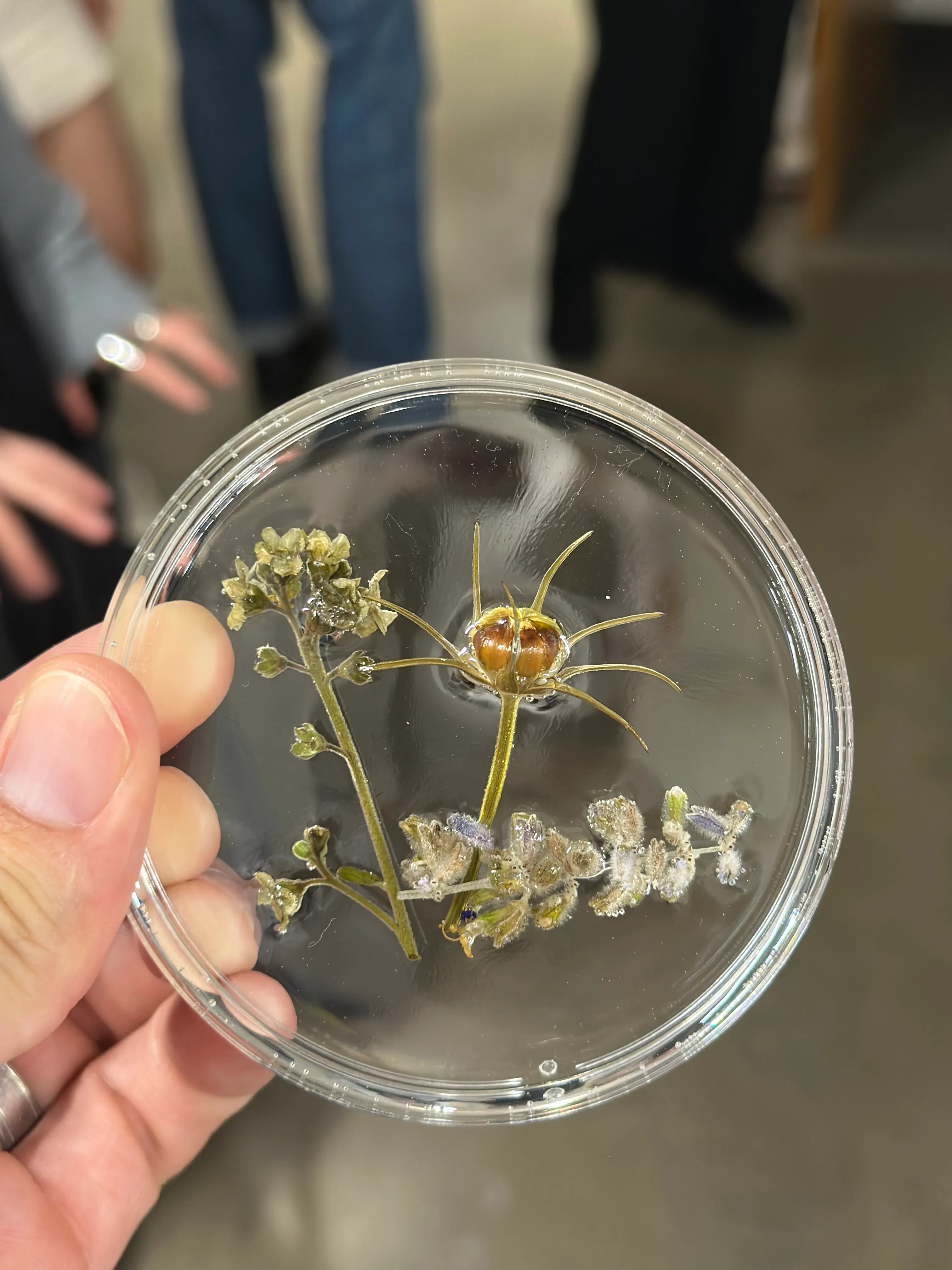
To transform the overlooked into the observed, we preserved plant fragments in clear epoxy within petri dishes, creating small windows for examining stems, seeds, and veins. Through collecting, cataloging, arranging, and casting, the specimens take on an archival quality. When grouped, the dishes form a grid that slows the viewer’s pace and elevates ordinary sidewalk finds into a shared study of urban plant life.
To transform the overlooked into the observed, we preserved plant fragments in clear epoxy within petri dishes, creating small windows for examining stems, seeds, and veins. Through collecting, cataloging, arranging, and casting, the specimens take on an archival quality. When grouped, the dishes form a grid that slows the viewer’s pace and elevates ordinary sidewalk finds into a shared study of urban plant life.
To transform the overlooked into the observed, we preserved plant fragments in clear epoxy within petri dishes, creating small windows for examining stems, seeds, and veins. Through collecting, cataloging, arranging, and casting, the specimens take on an archival quality. When grouped, the dishes form a grid that slows the viewer’s pace and elevates ordinary sidewalk finds into a shared study of urban plant life.
Experimenting with Riso
My experiment focused on capturing the finest details of each plant, documenting every lump, hair, grain, and crevice to reveal rich textures and forms. These details were traced to generate unique shapes for exhibition posters. The final compositions were produced using risograph printing, resulting in vibrant, tactile posters.
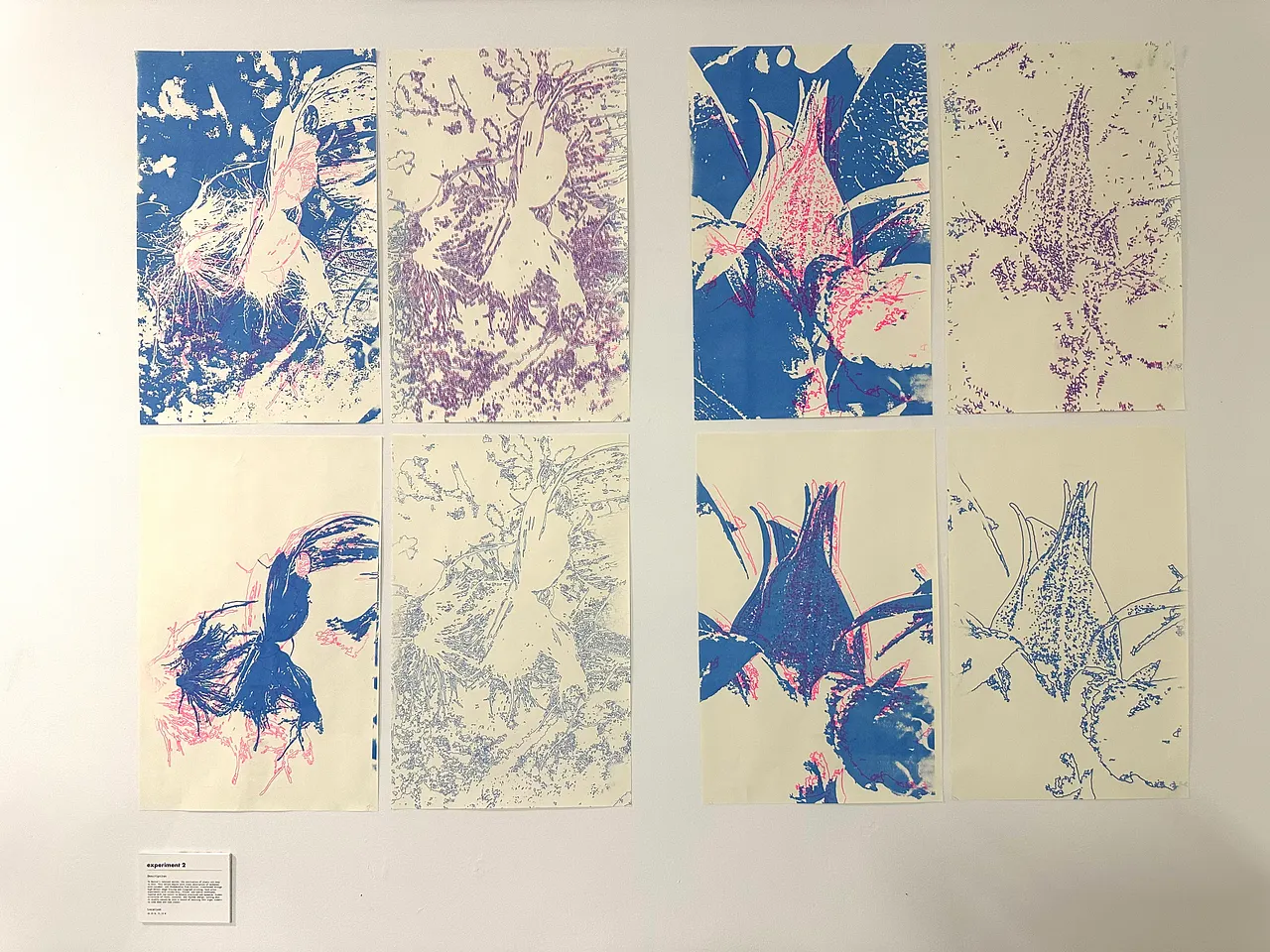
My experiment focused on capturing the finest details of each plant, documenting every lump, hair, grain, and crevice to reveal rich textures and forms. These details were traced to generate unique shapes for exhibition posters. The final compositions were produced using risograph printing, resulting in vibrant, tactile posters.
My experiment focused on capturing the finest details of each plant, documenting every lump, hair, grain, and crevice to reveal rich textures and forms. These details were traced to generate unique shapes for exhibition posters. The final compositions were produced using risograph printing, resulting in vibrant, tactile posters.
My experiment focused on capturing the finest details of each plant, documenting every lump, hair, grain, and crevice to reveal rich textures and forms. These details were traced to generate unique shapes for exhibition posters. The final compositions were produced using risograph printing, resulting in vibrant, tactile posters.
Final Zine- Lab “Folder”
We consolidated our experiments into a lab folder that brings together Yuting’s overlapped cards, Anne’s laser-cut prints, and my risograph posters. Inside, two small zines present field photos and notes, tracing how imagery evolved into silhouettes, textures, and plates. The folder also includes a transparent project timeline, type specimens, and concise documentation of methods and design decisions, offering viewers a clear and browsable record of the work.
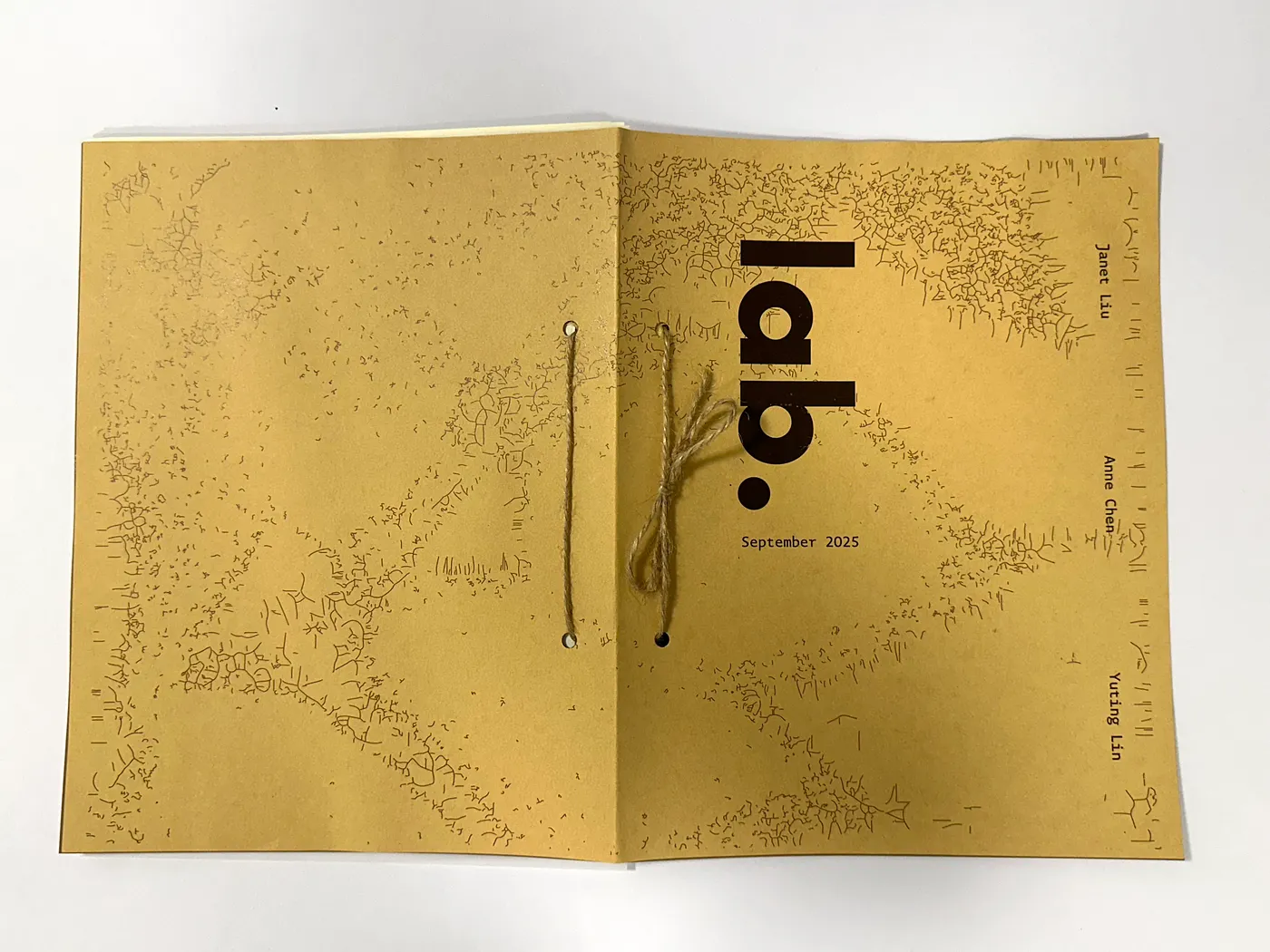
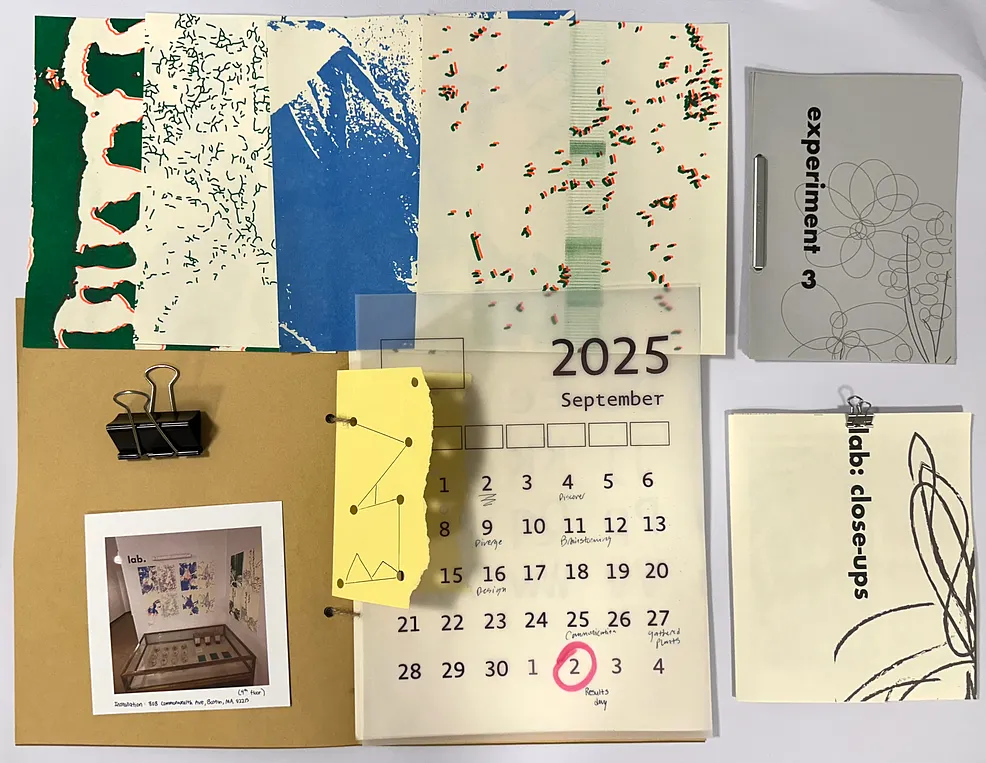
We consolidated our experiments into a lab folder that brings together Yuting’s overlapped cards, Anne’s laser-cut prints, and my risograph posters. Inside, two small zines present field photos and notes, tracing how imagery evolved into silhouettes, textures, and plates. The folder also includes a transparent project timeline, type specimens, and concise documentation of methods and design decisions, offering viewers a clear and browsable record of the work.
We consolidated our experiments into a lab folder that brings together Yuting’s overlapped cards, Anne’s laser-cut prints, and my risograph posters. Inside, two small zines present field photos and notes, tracing how imagery evolved into silhouettes, textures, and plates. The folder also includes a transparent project timeline, type specimens, and concise documentation of methods and design decisions, offering viewers a clear and browsable record of the work.
Final Exhibition
Final Zine- Lab “Folder”
We consolidated our experiments into a lab folder that brings together Yuting’s overlapped cards, Anne’s laser-cut prints, and my risograph posters. Inside, two small zines present field photos and notes, tracing how imagery evolved into silhouettes, textures, and plates. The folder also includes a transparent project timeline, type specimens, and concise documentation of methods and design decisions, offering viewers a clear and browsable record of the work.
Final Exhibition
Final Exhibition
Final Exhibition
Contact Me!
Contact Me!
janetjliu

janetliu.ca@gmail.com